
Histórias para ouvir.

Três audiolivros em inglês, narrados por Eddie Tonkoi. Conheça as histórias e suas gravações.

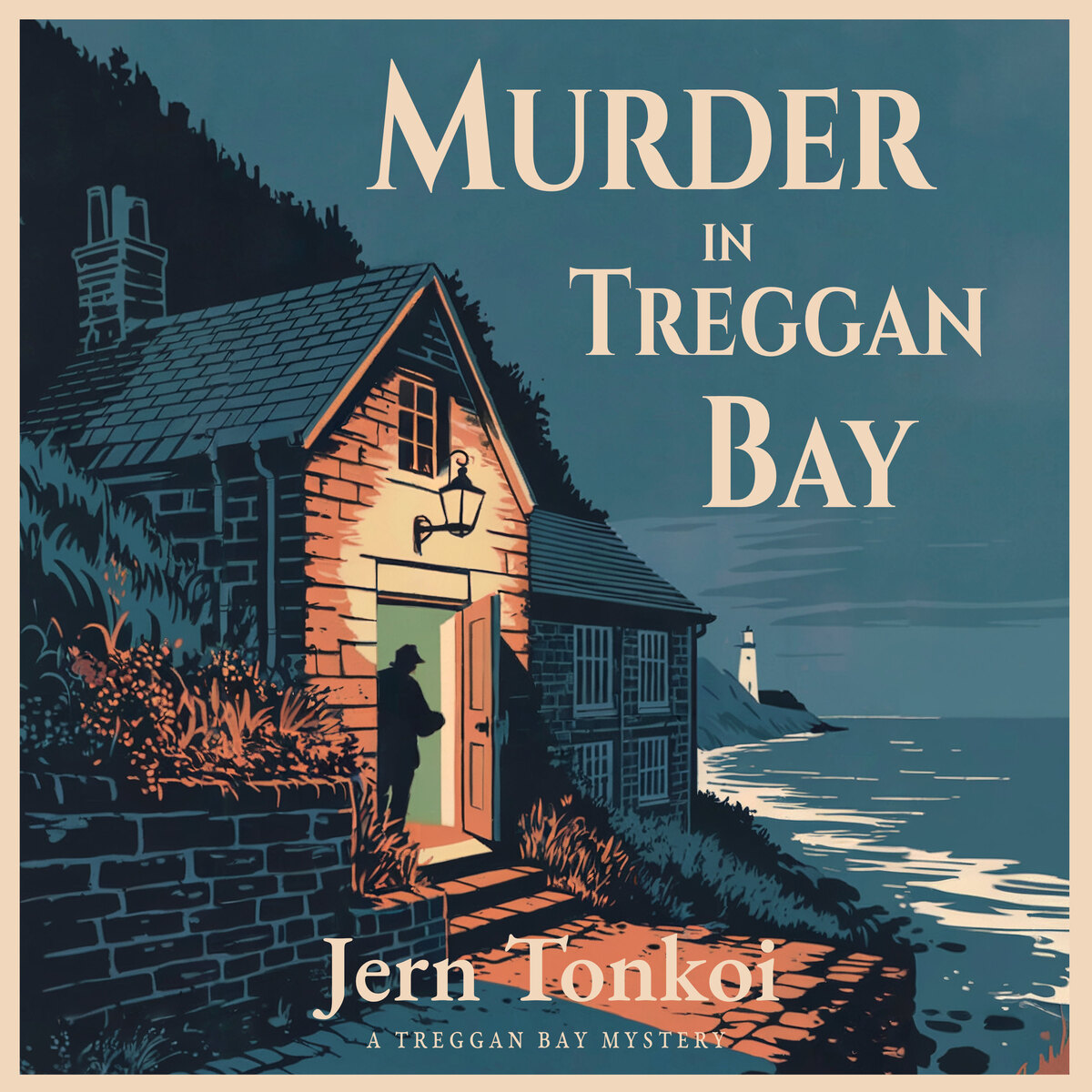
Murder in Treggan Bay

Murder in Treggan Bay

Ele voltou para cuidar de uma casa. O vilarejo tinha outros planos.

Noah Yalland pretende resolver a herança da avó e ir embora de Treggan Bay. Mas um empreendimento imobiliário divide o vilarejo, e Leo Petit, dono de um café, sabe bastante sobre sua família. Então um empresário é encontrado morto na biblioteca. Com Leo ao seu lado, Noah segue documentos desaparecidos, antigas lealdades e lacunas nos relatos dos moradores. Os Mistérios de Treggan Bay começam aqui: na costa de Devon, com humor seco e uma comunidade de memória longa.

Sobre este livro

Gravação em inglês

Narrado por Eddie Tonkoi

Abrir o arquivo da amostra de áudio
Ler a transcrição (em inglês)

A cluster of villagers clogs the path ahead, voices overlapping in low, irritable murmurs. I shoulder through with a few muttered apologies and a polite excuse-me or two, until I reach the front.

And there she is.

Eileen, gripping a pitchfork—an honest-to-God, rust-flecked, three-pronged relic that looks like it’s spent the last decade propped behind a compost bin. She holds it with both hands, knuckles white, the points pressed squarely into the chest of a man pinned to the flint wall.

He’s tall and alarmingly thin, all angles and poorly chosen tailoring. Possibly in his late fifties. Limbs awkward. Eyes bulging. He looks like he’s been cut out and pasted there. The navy suit is rumpled, his expression more so. It takes a moment, but then I clock him: the weasel from the pub. No flat cap this time—just a sweep of slicked-back hair losing ground at the temples, and a moustache so thin and mean it looks drawn on with a biro.

“Get out, you cold-handed bastard!” Eileen’s voice is iron. “Set foot in my library again and I’ll drive this thing straight through your middle like a pig on a spit.”

A middle-aged woman nearby—clipboard, blazer, blonde hair, face like a panicked vole in a chignon—shrieks, “Someone call the police!” She clutches her lanyard like a crucifix.

The crowd is mostly pensioners and dog-walkers, gathered at a prudent distance. No one moves to intervene. They observe like it’s Sunday panto.

I dart forwards, hands raised. “Eileen! You’ll do yourself a mischief—”

“Back off, Noah,” she hisses. “This rat’s sniffin’ round again. Pretending it’s a survey. Survey my arse.”

The pitchfork jerks as she says it, and I feel it catch—sharp—through the side seam of my jacket.

“Bloody—!” I leap back, heart thumping. The wool tears with a dreadful sound far more personal than it should be. Inches from skin. Too close.

Eileen blinks. Her fury wavers. And so do her hands.

The suited weasel gurgles something about ‘legal action’.

She growls, “Touch your foot on my library step again and I’ll pin you like a moth, Frank Cullen. And don’t think I won’t.”

With a last, warning jab that’s more theatrical than lethal, she lowers the fork. The watching villagers don’t clap—but I wouldn’t have been surprised.

I haul Cullen off the wall, more from instinct than sympathy. He’s trembling, though trying to smother it behind a curl of corporate bravado.

His briefcase bursts open in the mud—papers splayed, the dreaded Landmark Syndicate logo stamped bold across the pages. About as subtle as a fox in a chicken coop. He snatches it up with a grimace.

* * *

We walk slowly to a grey Lexus parked just up the street.

“Thank you,” Cullen mutters, adjusting his crushed lapel with a sniff. “Very unprofessional. Extremely volatile.”

“That’s Eileen,” I say, brushing my torn jacket. “What did you think would happen, waltzing into the village the morning after a protest? With a briefcase?”

He opens his mouth, likely to bluster something forgettable, but the clipboard woman—flustered, cheeks blotchy—jumps in first.

“We’ll, um, of course we’ll pay for your jacket. Here’s my card. Please—just call me Betty.”

“Oh, cheers.” I take the card without looking and offer my hand out of habit. “Noah Yalland.”

Cullen’s head snaps round. His expression sharpens like a hound catching scent.

“Maggie Trew’s grandson?”

“You knew her?” I ask, more guarded than curious.

“Not personally,” he says, a little too quickly. “But you’re just the man I was hoping to run into.”

I raise an eyebrow. “Oh?”

“The cottage,” he says, with a glint that feels rehearsed. “It has potential. Would you consider selling?”

Abrir o arquivo da transcrição (em inglês)

A disponibilidade varia conforme o país.
Audiolivro

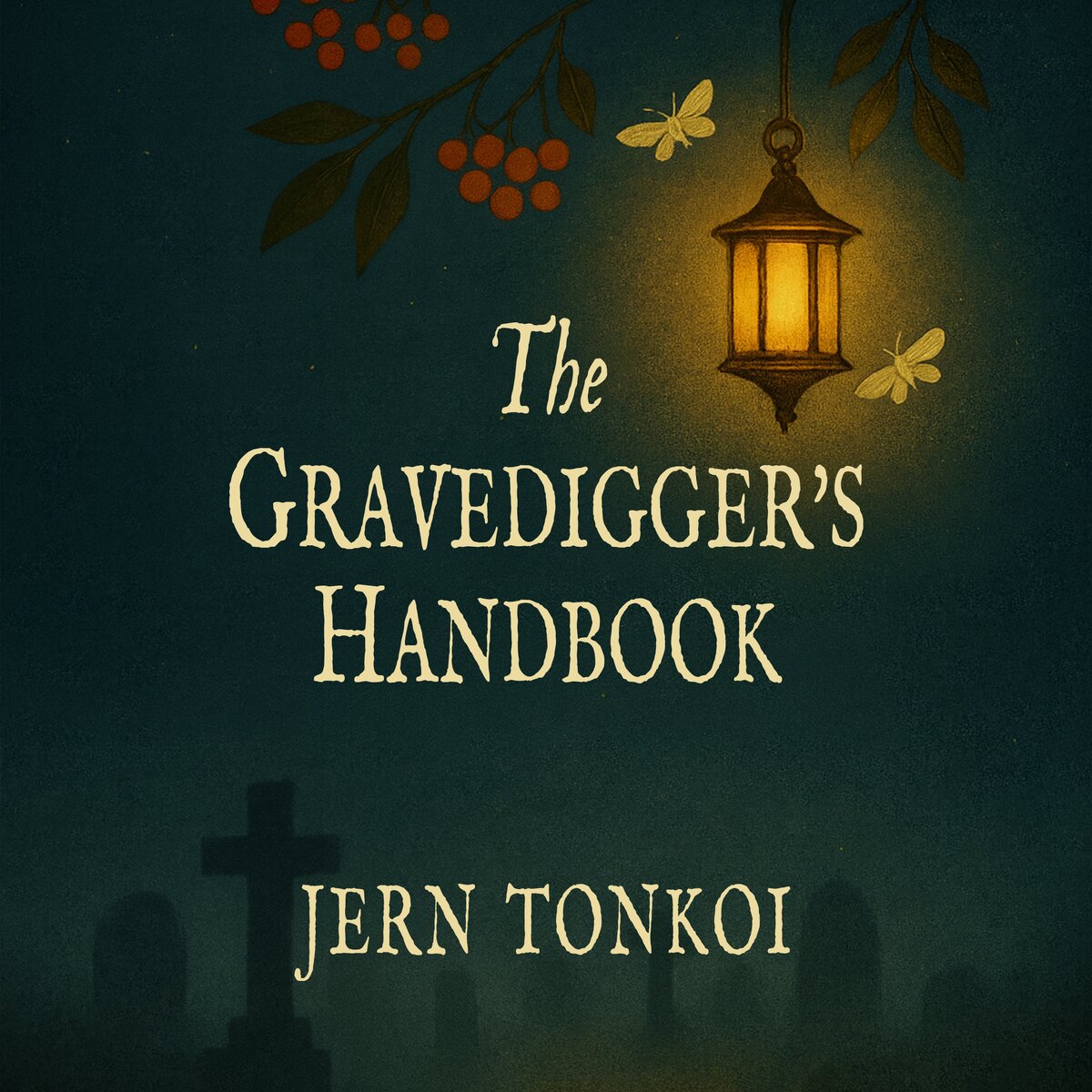
The Gravedigger’s Handbook

The Gravedigger’s Handbook

Lucien sabe cuidar dos mortos. Os vivos são mais complicados.

Em St Aubin’s Rest, Lucien Morel cuida dos túmulos, respeita as regras e leva suas responsabilidades a sério. Então Nat, um jovem artista de luto, começa a perturbar a ordem cuidadosa de seus dias. Entre as lápides, antigas promessas e dores caladas pedem para ser ouvidas. Lucien se vê atraído por uma ternura que não consegue organizar. Uma história de amor gótica, completa e serena sobre luto, arte e compaixão, com assombrações delicadas e um final agridoce.

Sobre este livro

Gravação em inglês

Narrado por Eddie Tonkoi

Abrir o arquivo da amostra de áudio
Ler a transcrição (em inglês)

Rule 1: Do Not Take It to Heart

Some people like cemeteries.

The best ones come to sit and remember. Quiet souls who bring flowers, talk a little, and leave the air softer than when they arrived. There are others too, the ones who take what isn’t theirs, or come to chase a thrill among the stones. I’ve little patience for them.

And then there are the dead. I don’t know if they like it here, or if liking has nothing to do with it.

And me—I’m the only living resident of St Aubin’s Rest, though some days the word living feels generous.

“Lucien.”

Her voice drifts through the still air—thin as smoke, fragile as the breeze through dry grass.

I stop and glance behind the old rose bush, a vast, untamed thing whose branches arch like ribs over the gravel. Its blooms have come back with sudden abundance after the rain fortnight ago, crimson petals beaded with dew and the faint scent of rust. Beneath it stands Odette, her small shape half-lost in the green. She turns, eyes pale and clouded like morning mist. She’s been a quiet fixture in my days for as long as I can remember—a presence more than a person, a voice that returns no matter the season. I’ve often wondered if she truly sees me, or only feels the air shift where I stand. Best not to ask.

“Odette,” I say quietly. “Good morning.”

She brightens at once. “Oh, good morning, dear. Have you seen him about today?”

“Not yet. Still another hour before visitors.”

“Ah, yes… of course.” Her smile deepens, folding into the fine creases that map her cheeks, the sort of lines made by a lifetime of kindness. Then she fades a little into the light, content to wait.

I move on, following the winding path through the graves. The stones dot the grassy hill like teeth in an old jaw—some white and clean as bone, others eroded to ghosts of names. Angel wings without faces. Crosses sunk at odd angles, tilting towards the valley below. A warm wind rises from the south, carrying the scent of thyme and dust from the fields. The first breath of summer. It whispers through the cypress and the wildflowers between the plots, stirring the edges of my coat.

The office squats at the end of the lane just inside the main gate—one small room and a toilet block, both the colour of old plaster. A red truck is parked at an impatient angle across the gravel. I sigh under my breath. The trust’s been hiring extra hands again. “Casual labourers,” they call them. Strangers to the dead, I call them. They never stay long enough to learn the ground’s temperament.

The door creaks as I push it open. A man in a red cap steps out of the toilet, wiping his hands on his jeans. He gives me a nod—or maybe just a grunt—and mistakes me for another day-hand.

Fine by me.

We walk into the office.

Inside, a young woman I don’t recognise looks up from the desk. Her smile falters when her eyes land on me. To her credit, she pulls it back—trained reflex, maybe kindness. I tug the hood lower without thinking. It’s habit now, the small mercy of sparing people the sight of what’s left of me. Easier for them. Easier for me. Keeps the clean distance from the living.

Mrs Arnaud told me last month she was retiring. I hadn’t wanted to believe her. Seeing this young woman behind the desk, neat blouse, hair pinned up against the heat, makes the truth settle. Must be her granddaughter.

“M-morning,” I mumble, hoping my voice stays small.

“Morning,” she replies, brave enough to sound almost steady.

She tears a sheet from the pad and scribbles notes with brisk, nervous movements.

Abrir o arquivo da transcrição (em inglês)

A disponibilidade varia conforme o país.

Audiolivro

Lanta: A bittersweet MM Romance

Lanta: A bittersweet MM Romance

Um beijo ao luar em Ko Lanta muda duas vidas.

Lester chega da Inglaterra a uma ilha tailandesa cujos ritmos ainda está aprendendo. Silom, um jovem barqueiro, conhece as marés e as obrigações que mantêm sua família unida. A atração cresce entre diferenças de classe, cultura e expectativas. Com os anos, a distância, o silêncio e acontecimentos incontroláveis transformam a ilha e suas vidas. Uma história de amor queer adulta e independente sobre a Tailândia, o tempo perdido e as escolhas que o amor exige. Íntima e esperançosa, com luto e passagens agridoces.

Sobre este livro

Gravação em inglês

Narrado por Eddie Tonkoi

Abrir o arquivo da amostra de áudio
Ler a transcrição (em inglês)

The colour of the breeze

When I woke the following afternoon, I found Michael sprawled in bed, still passed out in our hotel room. He stank of stale alcohol and sweat. His mouth hung open in a distinctly unattractive way, but I had no sympathy for him. My mind was elsewhere—on the mysterious stranger from the beach. Had it been real? Had I dreamt up that kiss in some drunken haze?

I slipped out of the room, leaving Michael to whatever nightmares might plague his sleep. Then I trudged down the length of Long Beach under a blazing sun that felt more punishing than any I remembered in Europe. Squinting against the glare, I scanned the horizon for a fishing boat—something that might match the silhouette I’d seen the night before.

Hope propelled me on. I walked for hours, sand gritting between my toes and sticking to my sweaty skin. I wanted to believe that the event had been real, not just a boozy hallucination. The clarity and tenderness of the kiss refused to leave my mind. It felt heartbreakingly genuine, even though I’d tasted the bitterness of my tears only minutes prior.

But the sea was dotted with boats, and each time I tried to spot a familiar shape, it just turned out to be a different vessel or a trick of the light. Eventually, exhaustion and dehydration reminded me I was made of flesh, bone, and an over-taxed heart. I sank down under the shade of a coconut tree, letting my arms drop onto the sand. The wide brim of my sun hat—ridiculous as it was—shielded me from further scorching.

I sat there for half an hour, grappling with disappointment. In that time, I replayed my foolishness with Michael, the shock of the kiss from the stranger, and the agony of wanting something impossible. It was all swirling together in my mind, creating an emotional brew that left me restless and unsatisfied.

By five o’clock, the shadows had grown long, but the sun was still punishingly strong. I considered abandoning my search. I didn’t even know the man’s name. Had I just been a foolish drunk, imagining comfort where there was none? Perhaps it was best left as a single, unforgettable moment: a beautiful but ephemeral experience that wouldn’t weigh me down.

Just as I was about to retreat to the hotel, I heard the hum of a motorboat coming ashore. The boat slowed as it neared the sand, and there, at the back, knees bent in a confident stance, was the very person I’d been looking for. I recognised that lithe, muscular form, the deep-brown skin, the crooked grin that curved the lips I’d tasted the night before.

He guided the rudder, bringing the boat to a gentle stop in the shallows. Another man—older, probably in his forties—jumped off. They exchanged a few words in English, something about rinsing off snorkel gear. My mysterious stranger hopped down as well, grabbing a basket of gear. They waded ashore and walked to a ramshackle bamboo hut. A shack would be more accurate.

I stood rooted in place, unable to speak, hardly believing my luck. When the older man emerged and left on a motorbike, I decided I had a chance to approach. I hovered near the shack for a while, trying to still my racing heart. Should I knock? Should I call out? My typical English reserve battled fiercely with my curiosity and longing. In the end, the last rays of the sun reminded me that daylight was slipping away. I hadn’t chased a personal desire like this in years, and so, summoning my courage, I walked up and rapped on the bamboo door.

No response.

I tried again, more insistent this time, anxiety bubbling in my chest. Still nothing. The sun was dipping below the horizon, painting the sea and sky in brilliant shades of pink and purple. My chance was evaporating along with the light.

Heart pounding, I pushed the door open.

Inside, the front room was dark and scattered with a few makeshift shelves, a bamboo bed doubling as seating, and snorkelling equipment hanging on the wall. A partition screen at the back let through the faint glow of a candle. The gentle splash of water reached my ears, and I picked my way across the uneven bamboo floor until I reached the screen.

I wished I’d knocked again, because what I found stole my breath in more ways than one.

Abrir o arquivo da transcrição (em inglês)

Também publicado com o título Lanta: Another Life.

A disponibilidade varia conforme o país.

Audiolivro