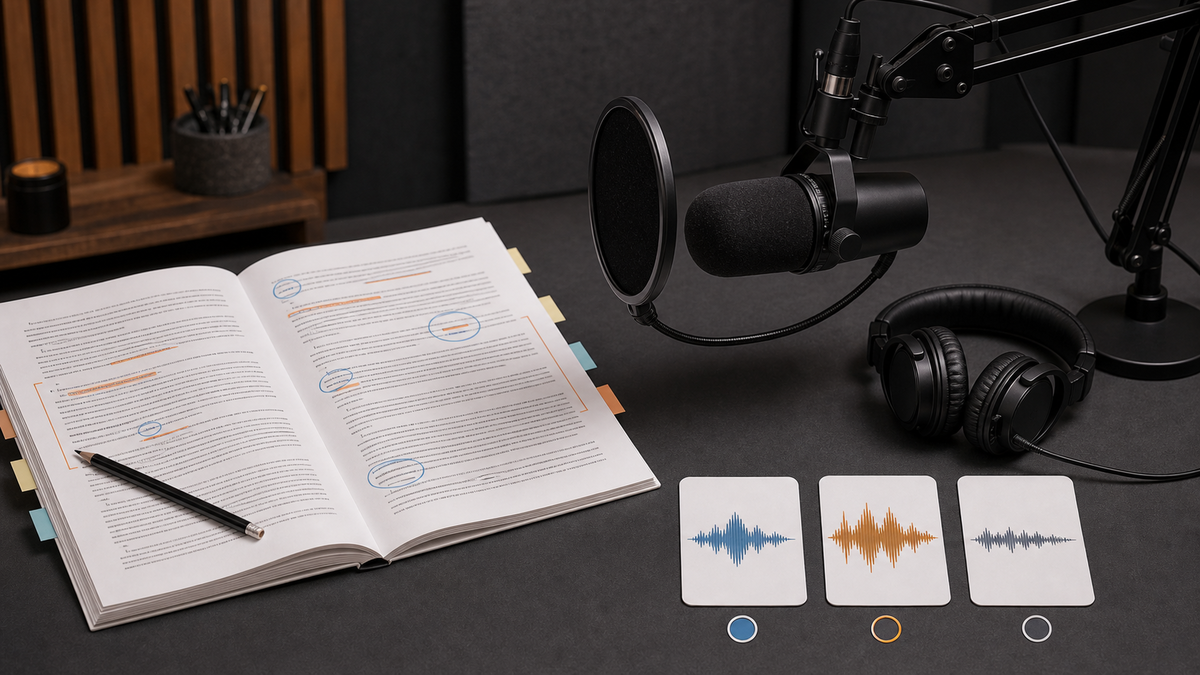
This one picks up where the mic-technique episode left off. Once the setup is repeatable, the next question stops being “can I get the same sound again?” and becomes much more awkward: what voice do I want the listener to live with for the whole book?
That turns microphone position from a source of accidental drift into a small creative control. A slightly closer placement gives more warmth and intimacy. A more off-axis placement can soften the edges. The hard part is that none of these is automatically right. The best choice depends on the book, the listener, and whether the sound still feels comfortable after more than a quick sample.
The useful test, for me, was not which version sounded most impressive in ten seconds. It was which version let me forget about the sound and follow the story. For Jern’s character-led work, that meant close enough to feel human, angled enough to keep the consonants comfortable, and plain enough that the voice gets out of the way.
That is the practical point of Part 4: choosing the book voice is also choosing what not to keep chasing. Once the sound is chosen, I can write down the physical setup, return to it tomorrow, and stop auditioning a new narrator every time I sit down.
Happy reading,
–Eddie.